
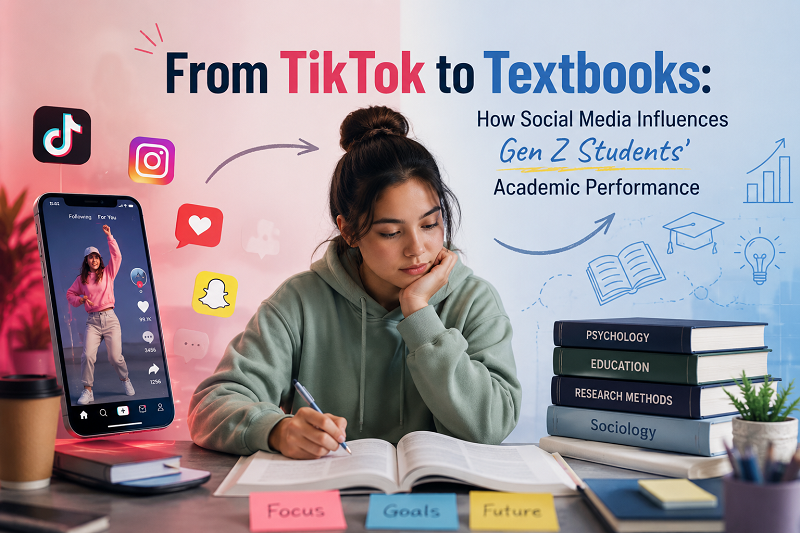
Social media has changed the way students communicate, learn, and access information. What was once thought of as entertainment is now a powerful source for educational content, career advice, study tips, and collaborative learning. Social media is no longer just a distraction for Generation Z – it has become a part of their daily school life. Digital platforms are revolutionizing the way people learn today, whether through short educational videos, online study groups, or by taking lessons from subject experts.
The educators, parents, and students need to understand the impact social media plays on Gen Z. These can be a great learning resource, but can also cause a lack of concentration, productivity, and an impact on overall academic achievement. The crucial part is studying how to combine learning and liable digital behaviors.
Why Gen Z Learns Differently Than Previous Generations
The generation of Gen Z has always known a world where you could always have a smartphone, high-speed internet, and social networking. They like learning experiences that are fast, visual, and interactive, unlike previous generations. While traditional texts can still be useful, many students now find that they can supplement the learning they receive in the classroom with content they find online, which can be done on platforms like TikTok, Instagram, YouTube, and Reddit.
These learners like to have instant explanations of complex topics and are interested in short educational videos. Instead of reading long chapters, many students take advantage of the short tutorials that can break down hard concepts in minutes.
This change is indicative of the broader trend in which accessibility and engagement are equally as significant as conventional methods of teaching.
Educational Aspect of Social Media
Social media has become a great educational resource, although it is often derided as a distraction. From maths and science to history and literature, thousands of teachers, universities, and professionals produce informative materials today.
All tutorials, revision tips, language lessons, and exam preparation strategies are available to students free of charge anytime and anywhere. Many educational creators share information in the form of animated illustrations, real-life examples, and storytelling, which helps to make hard topics more comprehensible.
This positive social media influence on learning is especially evident in visual learners, who learn better with engaging multimedia content.
Furthermore, numerous students use online communities to ask questions, discuss courses, and work on projects with other students across the globe. With evolving Gen Z education trends, students increasingly combine digital learning resources with a trusted movie review writing service to improve their critical thinking and analytical skills.
TikTok: More Than Just Entertainment
TikTok has emerged as one of the most impactful platforms for the university and college students! The site is renowned for dance videos and entertaining content, but it’s also built up a huge educational community.
People from the teaching, research, medical, engineering, and language fields have been sharing short educational videos on a regular basis, which explain challenging concepts in less than two minutes. These short lessons frequently inspire students to delve deeper into a topic by either reading more on the subject or discussing it in class.
As more and more creators have captured the spirit of education, the impact of social media on Gen Z extends beyond entertainment, fostering curiosity and self-directed learning.
By simply browsing through content algorithmically recommended to them, students can find new things to learn in school. Before deciding to buy a college paper, consider services that provide feedback, editing, and academic guidance to help you produce your own original work.
How to Improve Collaboration Using Digital Communities
Communication among students has been greatly enhanced by the use of social media. Learners can collaborate and share notes, ask questions, and study for exams together in group chats, discussion forums, and private communities, no matter where they are.
These collaborative spaces are particularly valued by students taking online/blended courses. They can interact with peers, exchange resources, and engage in productive learning conversations outside of class.
The collaborative opportunities emphasize the positive effect social media can have in learning through teamwork, peer support, and knowledge sharing.
In addition, students who are unsure about asking questions during lectures may find it more comfortable to engage in online discussions.
The Hidden Challenges Students Must Recognize
While social media is beneficial, it can also have a detrimental impact on academic achievement if used irresponsibly. Constant notifications, algorithmic content, and endless scrolling can affect concentration and cause procrastination.
Many students have trouble differentiating between productive use of education and over-entertainment. Even a brief study break can become hours of time spent viewing non-study videos.
Excessive social media use has also been associated with sleep disturbances, anxiety, and a short attention span. If students don’t develop healthy habits around the internet, these can eventually decrease academic performance.
Knowing the good and the bad provides clues to why social media has a mixed and complicated impact on Gen Z.
Finding the Right Balance Between Learning and Entertainment
Balance is key, not total banishment of technology, to success in today’s learning landscape. Students who are purposeful users of social media for learning tend to have more positive outcomes from the use of social media than those who use it primarily for fun.
It’s simply a matter of small steps. Limiting screen time, turning off unnecessary notifications during studying time, and tuning into good educational content creators can help maximize productivity and minimize distractions.
There are also many students who have productivity apps installed to stop them from accessing entertainment sites during study time.
Such practices are conducive to healthier Gen Z education practices: technology as a learning partner rather than a distraction.
How Schools are Adapting to Digital Learning
Educational institutions are becoming more aware that social media isnot something that can be overlooked. There are currently a number of schools and universities that incorporate digital platforms in the classroom.
Teachers upload revision content to social platforms, run interactive quizzes, make educational videos, and promote online discussions to continue the learning process outside of the classroom.
Some universities even teach students to critically assess online information, to differentiate between reliable academic sources and misinformation.
The innovations show the ongoing development of how Gen Z is being educated as institutions adapt to digital communication methods in order to uphold academic integrity.
Critical Thinking Matters More Than Ever
Digital literacy is one crucial skill that students need to learn these days. While there are great learning opportunities on social media, there are also inaccuracies, false claims, and unverified opinions.
To be familiar with how to check information in peer-reviewed journals, university publications, and trustworthy educational websites before taking information from social media platforms.
By fostering critical thinking, learners can responsibly engage with online materials and enhance their research capabilities.
Another key element in Gen Z education trends, which plays a crucial role in preparing students for academic success and future careers, is the growing focus on information evaluation.
The Future of Learning in a Social Media World
AI, personalised learning, and creating educational content are transforming the learning landscape. The classrooms of the future will be a mix of old and new, with a focus on interactive learning, video, simulations, real-time discussions, and online learning communities.
These technologies can be used wisely, as they can be used to increase engagement without taking away the role of teachers and formal education.
The future of social media in learning will largely depend on how students, educators, and institutions support responsible digital citizenship and promote innovation in learning.
Final Thoughts
Social media has permanently changed the educational landscape for Generation Z. Platforms like TikTok, Instagram, and YouTube now serve as valuable supplements to traditional learning, offering accessible explanations, collaborative opportunities, and engaging educational experiences. However, these benefits come with responsibilities. Students must develop healthy online habits, verify information carefully, and maintain a balance between digital engagement and focused study.